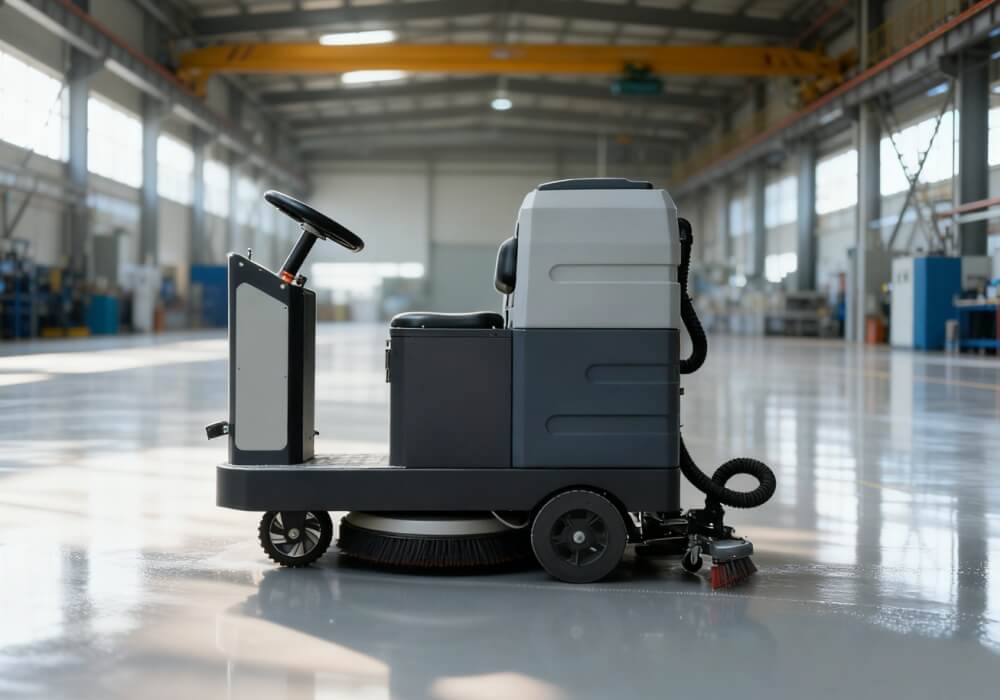
Campus floor cleaning works best when cleaning methods match each area of the school. Hallways collect dust and shoe marks throughout the day, canteens deal with food spills and grease, and playgrounds bring in sand, leaves, and dirt. Many schools clean these areas 2–5 times per day, depending on student numbers and weather. Using the right school floor cleaning equipment helps reduce cleaning time by 30–50%, improves floor appearance, and keeps walking surfaces dry for students, teachers, and visitors.
School buildings experience different cleaning needs from morning arrival to afternoon dismissal. A campus with 800–2,500 students may record several thousand footsteps every day, and research has shown that around 80% of indoor dirt enters through shoes. This is why entrance halls and corridors usually become dirty first. As traffic continues into dining areas and outdoor spaces, different machines become more suitable for different surfaces.
Hallways usually need frequent light cleaning instead of one heavy cleaning session at the end of the day.
Vinyl, terrazzo, sealed concrete, and ceramic tile are common hallway materials. Walk-behind scrubber dryers are often used because they wash, scrub, and dry the floor in one pass. Many commercial models clean 1,500–3,500 m² per hour, allowing maintenance staff to finish long corridors before class changes. Lithium battery machines introduced after 2020 also reduce charging time compared with older battery systems.
Canteens create another type of cleaning job because drinks, sauces, cooking oil, and food particles build up throughout breakfast and lunch service. Warm water combined with the correct detergent usually removes grease more effectively than cold water. Many schools schedule cleaning three to six times daily, with additional spot cleaning during busy lunch periods. Dry floors also lower the chance of slips near serving lines.
| Campus Area | Common Dirt | Cleaning Frequency |
|---|---|---|
| Hallways | Dust, shoe marks | 2–4 times daily |
| Canteens | Grease, drinks, food | 3–6 times daily |
| Playgrounds | Sand, leaves, litter | 1–2 times daily |
| Entrances | Mud, moisture | As needed during the day |
Outdoor areas need different equipment because brushes must collect larger debris instead of only washing smooth floors. Ride-on sweepers are commonly used for playgrounds, sports courts, and walking paths. Depending on brush width, many machines cover 4,000–7,000 m² per hour. During autumn, leaves can increase cleaning time by 20–40%, making larger collection hoppers more useful than smaller push sweepers.
As campuses become larger, maintenance teams often combine several machine types instead of relying on one solution. Compact scrubbers work well inside classrooms and narrow corridors, while ride-on machines reduce operator fatigue in buildings exceeding 15,000 m². Schools also compare battery life, water capacity, brush pressure, and daily maintenance before selecting equipment.
Cleaning results improve when machine size matches the floor area instead of choosing the largest machine available.
Regular maintenance keeps machines working consistently throughout the school year. Brushes gradually wear down after 300–600 operating hours, while squeegee blades and filters should be checked every week. Battery charging should follow the manufacturer's recommendations because frequent incomplete charging may shorten battery life by 15–25% over several years of use.
Many facility managers also look at operating costs before purchasing equipment. Water-saving scrubber dryers can reduce water use by up to 50% compared with traditional mop-and-bucket cleaning, while low-noise machines operating below 70 dB allow cleaning during library hours or evening classes without causing unnecessary disruption.
When comparing suppliers, schools often review cleaning capacity, service support, replacement parts, operator training, and warranty coverage together. More information about different types of school floor cleaning equipment can help maintenance teams compare machines designed for educational facilities before making purchasing decisions.
Daily floor care becomes more consistent when hallways, canteens, and playgrounds each receive equipment designed for their own conditions. Matching machine size, cleaning schedule, and floor material helps reduce labor hours, keeps floors cleaner throughout the day, and supports a safer environment for students, staff, and visitors.