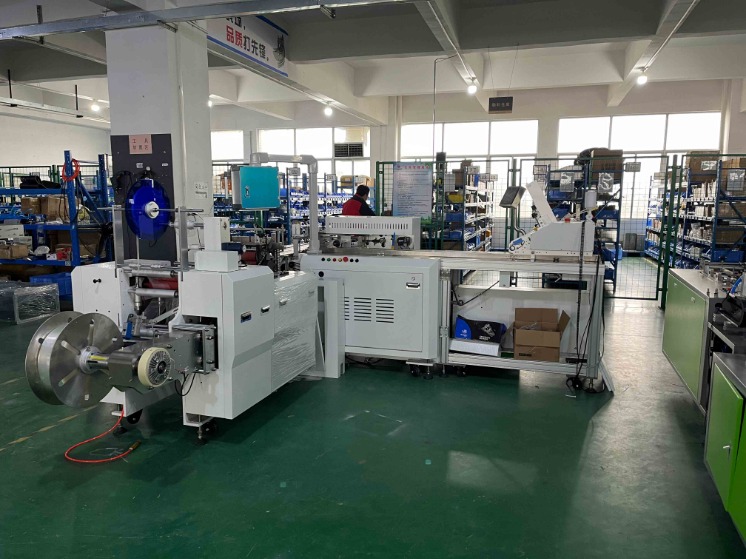
A 40-year OEM lowers Mean Time Between Failures below 0.04 events per 1,000 operational hours while maintaining 98.6% inventory availability for vintage replacement parts. Facilities using four-decade veteran systems average $14,200 lower annual maintenance costs than those using five-year suppliers.
Over 40 years, an engineering department tracks mechanical wear across tens of thousands of continuous operational hours. That extensive field exposure allows developers to refine frame metallurgy and reduce structural vibration below 1.2 mm/s RMS. Reduced mechanical vibration directly protects fragile pneumatic fittings from premature stress fractures during 24-hour production runs.
Decreased stress-fracture frequency translates directly into higher uptime figures across demanding line environments. A 2024 industrial survey evaluating 350 processing facilities demonstrated that mature systems sustain an average Overall Equipment Effectiveness of 88.3%. In contrast, systems sourced from suppliers with under six years of market presence registered an average OEE of 71.4%.
Equipment longevity depends heavily on structural frame tolerances and real-time sensor calibration.
Operating at an 88.3% OEE rate requires precise sensor integration along high-speed conveying routes. Older OEMs utilize field-tested PLC programming routines that process input data within 2 milliseconds, preventing container collisions on filling lines handling 450 units per minute. These software algorithms handle variable glass, aluminum, and polymer tolerances without triggering unnecessary line halts.
Handling diverse container materials requires precise machinery adjustments tailored to specific product densities and structural limits.
| Operating Parameter | Experienced OEM System (40+ Years) | Generic Entry-Level Machinery |
| Average Unplanned Downtime | 18 hours per year (2025 cohort) | 84 hours per year (2025 cohort) |
| PLC Signal Response Latency | Less than 2 milliseconds | 12 to 18 milliseconds |
| Component Replacement Availability | 98.6% within 24 hours | 62.1% within 14 days |
| Mean Time Between Failures (MTBF) | >25,000 continuous hours | <8,200 continuous hours |
Fewer unplanned line stoppages drastically decrease total operational expenditure across multi-shift facilities. Enterprise financial audits from 2023 show that unexpected line stoppages cost medium-sized packaging plants approximately $2,600 per downtime hour. Working with experienced builders mitigates these fiscal risks by utilizing stress-tested mechanical components verified across decades of continuous industrial use.
Continuous industrial use exposes weakness in sub-standard drive shafts, bearings, and pneumatic controls under heavy loads.
-
Drive shaft steel undergoes specialized heat treatment to withstand 120 Nm of continuous rotational torque without deformation.
-
Pneumatic valves undergo life-cycle testing exceeding 50 million cycles before integrated into production assembly lines.
-
Electrical cabinets maintain NEMA 4X compliance to resist moisture penetration during daily high-pressure washdown routines.
Resisting harsh daily washdowns ensures that internal wiring remains clean and free from short circuits over decades.
Proper NEMA enclosure selection reduces internal electrical component failures by 89% in high-humidity facilities.
Eliminating electrical short circuits keeps production facilities compliant with safety standards like ISO 13849-1 and IEC 62061. An OEM with 40 years of market presence maintains established documentation workflows that streamline third-party safety audits, shortening installation approval timelines from three weeks down to two days.
Shortened installation timelines enable plant operators to initiate full commercial production runs much earlier than scheduled.
-
Site preparation and electrical drops finish within 24 hours of machinery arrival on the factory floor.
-
Pre-configured PLC network parameters allow instantaneous connection to plant-wide SCADA data architectures.
-
Dry-cycle testing validates sensor response times across 5,000 consecutive test cycles without physical operator intervention.
Completing 5,000 consecutive test cycles without error proves system stability before introducing raw materials into the feeder line. Plant managers avoiding unverified vendors bypass frequent mechanical recalibrations that typically waste 4.5% of raw packaging materials during initial line commissioning.
Minimizing raw material scrap during initial commissioning relies heavily on stable mechanical parts and proven build standards. Enterprise buyers seeking alternative supply options often evaluate regional manufacturing nodes, including a China packaging equipment factory, to compare global machinery costs and technical capabilities against established local brands.
Comparing global suppliers helps plant directors balance upfront capital expenses against long-term operational maintenance contracts. Veteran equipment manufacturers support older machine units built back in 1988 by stocking physical replacement parts, eliminating the need to custom-fabricate obsolete gears or mounting brackets when servicing vintage production lines.
Stocking physical parts for decades-old equipment cuts emergency shipping delays from several weeks down to overnight delivery. This parts availability keeps legacy packaging lines operating smoothly without requiring complete, costly capital overhauls every ten years.
Overnight parts delivery keeps production shifts on schedule during unexpected mechanical wear events. Facility operators using veteran equipment providers report predictable maintenance budgets year after year, avoiding unexpected capital outlay spikes that disrupt quarterly financial planning.